
The Amazon is not just a forest. It is a living system that breathes, transports water, regulates the climate, and connects territories through invisible flows of moisture known as flying rivers. These atmospheric corridors carry water from the Atlantic Ocean into the interior of the continent, fueling the rains that sustain the forests, rivers, indigenous territories, and life across much of South America.
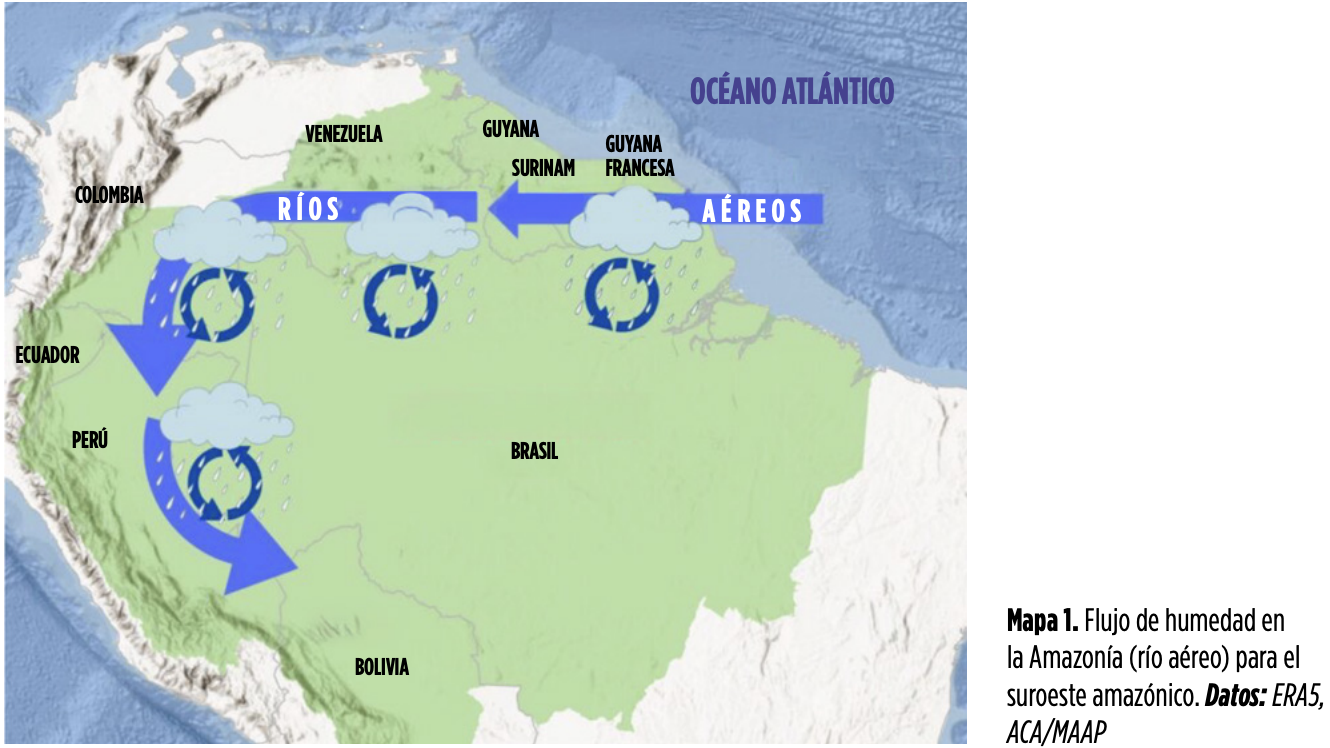
The technical article “Tipping Point in the Amazon: The Importance of Flying Rivers Connecting the Amazon,” published in the report *Amazon at Risk of Extinction*, warns that deforestation and forest degradation are disrupting this natural system, increasing the risk that some Amazonian areas will transition from tropical forest to drier, savanna-like ecosystems.
What are flying rivers?
Flying rivers are streams of atmospheric moisture that travel from the Atlantic Ocean across the Amazon. As they move forward, the forests recycle that moisture through evapotranspiration: trees release water vapor into the atmosphere, intensifying the rains that fall further downstream.
This process creates a kind of natural “water pump.” Without forests, that pump loses power. Without moisture, rainfall decreases. And without rainfall, the Amazon becomes more vulnerable to droughts, fires, and biodiversity loss.
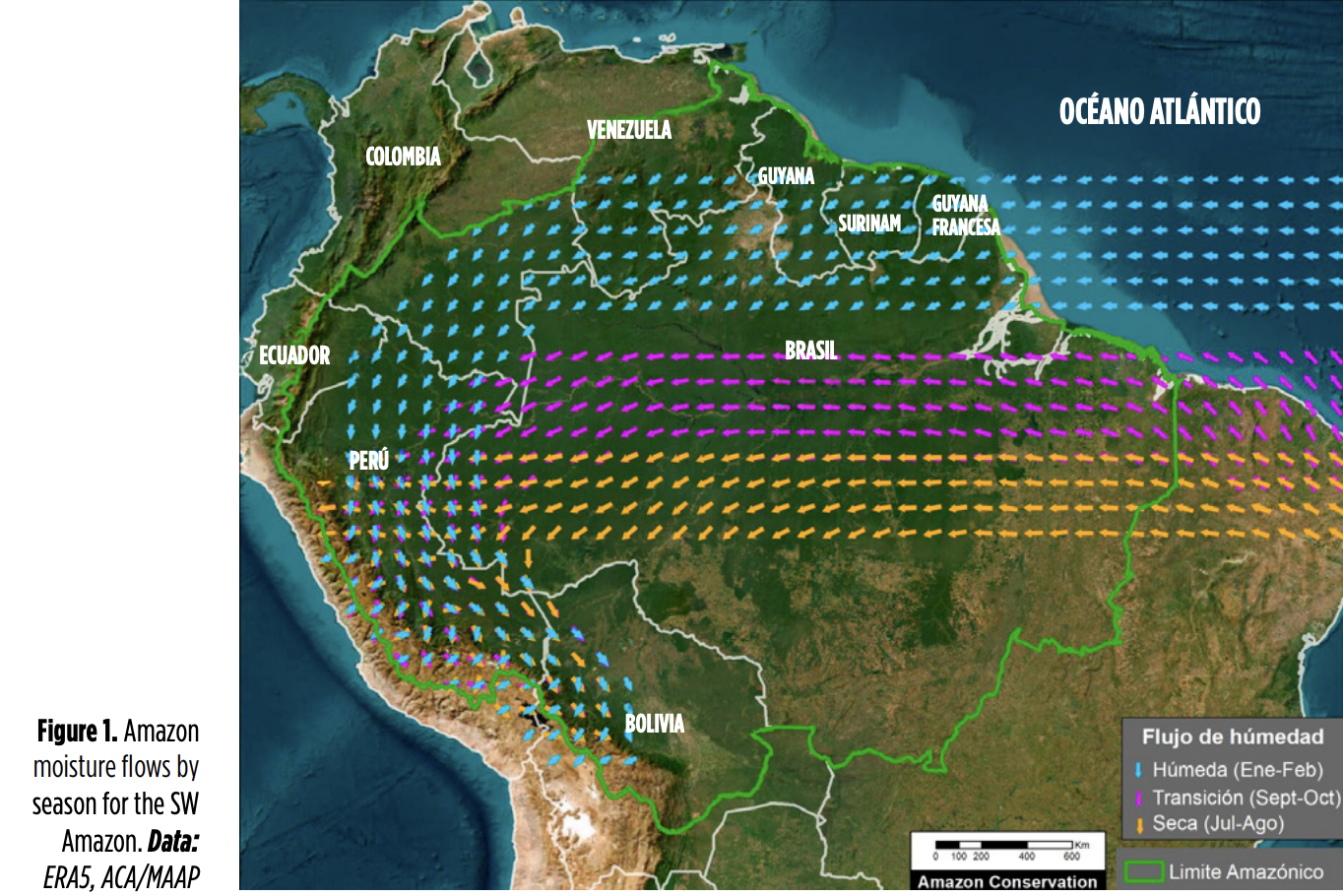
The tipping point does not affect the entire Amazon equally
One of the report’s main conclusions is that the point of no return should not be understood as a single event affecting the entire Amazon at the same time. Some areas are more vulnerable than others.
The study identifies the southwestern Amazon, particularly Peru and Bolivia, as one of the most sensitive areas. These regions rely heavily on moisture recycling from the eastern Amazon. If deforestation continues to affect moisture corridors, these areas could face a critical reduction in rainfall.
Deforestation in one country affects the entire region
The Amazon functions as a transboundary ecological unit. What happens in eastern Brazil can affect the flow of moisture toward Colombia, Ecuador, Peru, and Bolivia, including the tropical Andes mountains.
This demonstrates that Amazon conservation cannot depend solely on isolated national policies. The climate crisis, deforestation, and the disruption of the “flying rivers” require regional cooperation, territorial governance, and effective protection of the forests that sustain the water cycle.
Droughts, Fires, and Savannization
The report notes that the dry season has lengthened in the southern and eastern Amazon over the past decades, with one of the most severe seasons observed between 2023 and 2024. These warmer and drier conditions are fueling record-breaking fire seasons.
The risk is clear: if forests lose their ability to recycle moisture, some regions may enter a process of accelerated degradation. The shift from tropical forest to savanna is already being observed in areas affected by recurring fires.
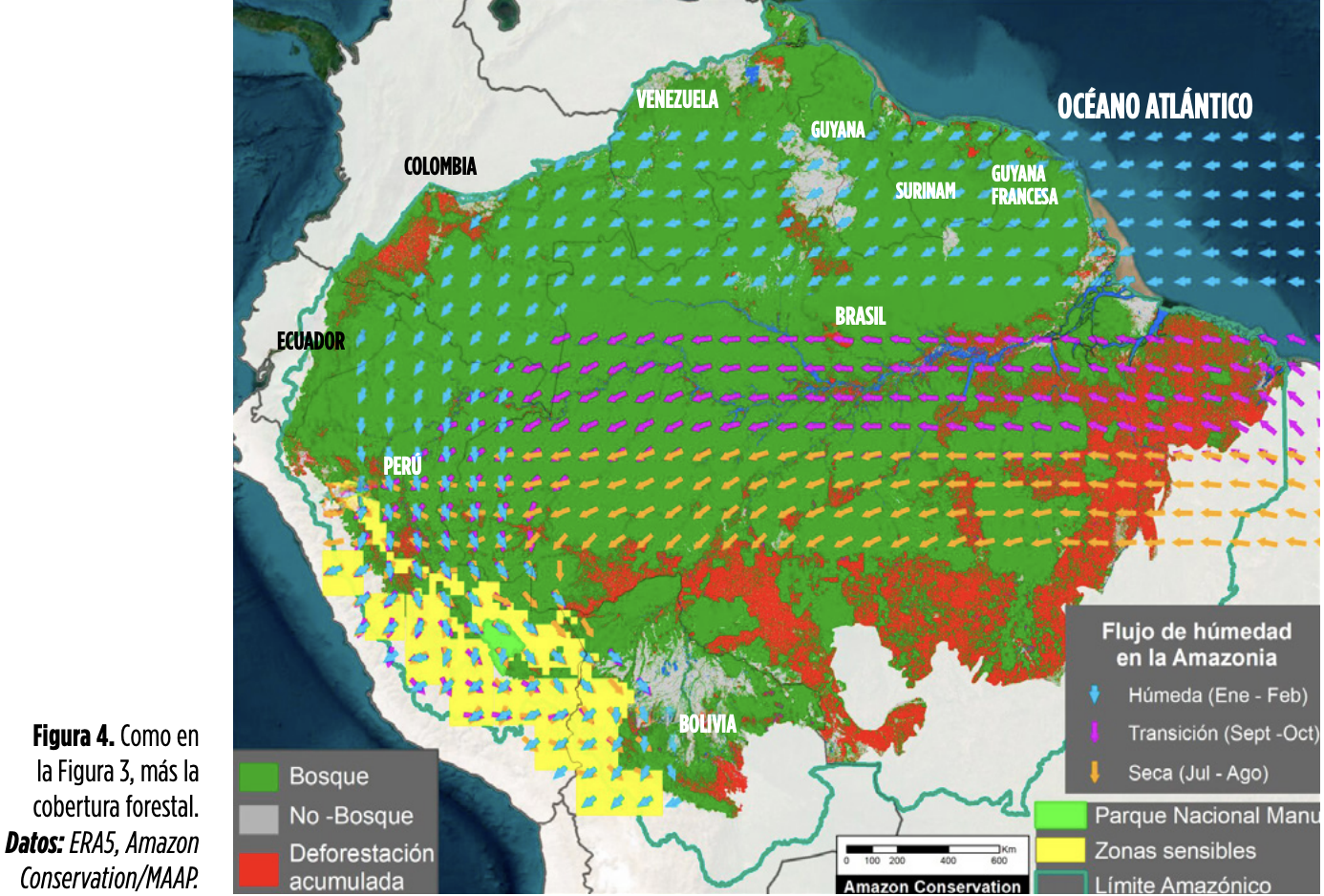
Protecting forests means protecting water
During the wet season, much of the moisture flows through continuous primary forests in the northern Amazon. But during the dry and transitional seasons, moisture flows pass through areas heavily affected by deforestation, especially in the central Amazon.
That is why conserving the forests that still stand is essential to maintaining the flow of moisture to the most sensitive areas. It is not just about protecting trees: it is about protecting the water cycle that sustains life in the Amazon and beyond.
The Perspective of Indigenous Peoples
For COICA, these findings reinforce a historical truth: Indigenous territories are essential to preventing the Amazon from reaching a point of no return. Where Indigenous governance exists, there is greater protection of forests, rivers, and ways of life.
Defending the Amazon requires recognizing the role of Indigenous peoples as political actors, guardians of the territory, and key players in climate solutions. Without territorial rights, without direct funding, and without full participation, there will be no real response to the crisis.
Read the full article and learn why protecting the flying rivers is urgent to prevent the Amazon from reaching a point of no return.